
My thoughts of my graded unit project is that I was pretty successful for what I captured despite limited time. Wildlife photography is something unpredictable, like the weather it can change quickly, there is no guarantee of capturing what you would like. I set out the task of trying to capture a variety of wildlife to see in Scotland as part of wildlife tourism. I feel strongly for the protection of our wildlife and there has always been that small part of me that looks back thousands of years when Scotland t hrived with wolves, wild black boar, bears and many other species that were hunted into extinction. Part of me feels wildlife has been severely limited in many ways and therefore with the interest in wildlife tourism it helps capture people’s love and imagination so they themselves become aware of what they have here to see, not just Scotland’s beautiful landscape to help protect what Scotland has.
I was inspired by photographs I saw for sale asprints in places like Edinburgh Zoo’s souvenir shop or from images captured of the wildlife on Visit Scotland’s wildlife tourism pages. You get a sense of the animals in their natural habitat rather than pictures just taken of them held captive in a zoo, the researched images were appealing and that’s what I aimed to achieve through the images I captured that not only gives an image for what Scotland has to offer but tells a story. Many of the animals aren’t native to Scotland so that was also challenging as much of their natural habitat can be somewhat different. The images  I captured I feel were very successful in this regard, a great example of the wolves I captured with the woodland surrounding them.
There were a few shoots I felt disappointed with, visiting Benmore Botanic Garden I was unsuccessful capturing any insects using macro technique and became increasingly difficult to find, with the restricted time and the one image I had for a red squirrel habitat I felt wasn’t sufficient enough, the perfectly lined trees felt slightly out of place rather than a natural wild forest. I was also disappointed with the shoot at Edinburgh Zoo as shooting at a downward angle wasn’t appealing, some of the animals I would have imagined and liked to have captured weren’t in the right place to capture such as the meerkats closer to the back fencing, or the inactivity of the monkeys I would have liked to have captured. This shows the nature of wildlife photography, there is no guarantee of capturing something appealing.

Row of trees in Benmore Botanic Garden with sun breaking through.
Some places I had originally planned to visit such as Glencoe, I changed plan. Having visited the Cairngorms National Park it changed my perspective. I visited the Cairngorms early April for a one to one photographic day tour with a professional wildlife photographer, Neil McIntyre and having later visited the Cairngorms over the duration of a weekend later that month there were many things I discovered available in the surrounding area which opened up opportunity for capturing great images, therefore decided to stick around that surrounding area. The day tour with Neil McIntyre proved to be my most successful shoot, not only did I learn a good few things from Neil, the experience was worthwhile and thanks to his excellent work I was able to get close to the red squirrels and wild hare in their natural habitat. You learn from Neil that it’s not as straightforward as taking a camera out into the wild and hoping for the best, you get an appreciation that it takes time and hard work for wildlife such as red squirrels to grow accustomed to you. Also  why spending a dedicated amount of time in the one area can make the difference requiring a great deal of patience.
From previous coursework I have done throughout the year in telling a story, Neil’s work is certainly inspiring in that regard and when it came to showing me how to properly photograph landscape for habitat shots, it became apparent to me the finest smallest details, such as the patterns on a rock face. You can definitely see this in his work from images he has captured himself of empty trees that although no sign of the red squirrels, it tells a story of where to find them, where they live. It also helped greatly as I gained an important understanding of using the sun behind me to wait for it to break out from the clouds to light the foreground, using leading lines to capture stunning landscape images with detail in the sky using the correct exposure.
I felt it greatly benefited me having done the one to one tour with Neil McIntyre, he has a wealth of experience and knowledge in wildlife and landscape photography, he was able to offer me guidance if that’s the field I wish to go towards in my career as well as helped me improve my insight with techniques. A few examples of this was switching from manual mode which I usually use on my camera to aperture priori ty with high speed drive mode when photographing the red squirrels. The camera does fantastic work for correcting exposure as the light behind me kept changing from the sun breaking from
clouds. The second example was learning the camouflage technique using the extended depth of field, something I would not have thought of or spotted myself. These small things greatly helped improve my skillset for capturing some fantastic images.
Having revisited the Cairngorms National Park I did a photographic tour of the Highland Wildlife Park which was a slight disappointment photographing through the wired fencing and the tour guide had no knowledge in photography. I wouldn’t say it was worth £150 however did manage to capture a few fantastic images. If comparing that to the photographic tour I did with Neil McIntyre, there is a big difference. Neil as mentioned has a wealth of experience who can tell you where to stand and suggest what is best, this you can benefit from. Some sections of the park you could walk around yourself and  capture, the only difference with the photographic tour is that they feed the animals giving you the chance to see them closer.
Some images I captured were a slight disappointment such as the noticeable wired fencing in the backdrop when photographing the wolves or even the Scottish wildcat. Another disappointment was shooting down at some of the animals such as the monkey’s which is less desirable. I knew that from what I captured on the tour with Neil, the pictures I captured of the red squirrels and wild hare stood out as my best images. It was then challenging for me to try and capture images that could match that standard, especially in places such as Blair Drummond Safari Park or the Highland Wildlife Park.
Another slight disappointment was a shoot I planned for the Osprey Centre in Boat of Garten, I was limited to what I could capture due to the distance between the Osprey nest and the hide we watched from in the Osprey Centre. Saying that it was a wonderful experience getting to see the nest and the birds in flight and for the limited images I captured they tell a story with the male having flew back to the nest with food and the female taking off with it to eat. It wasn’t until later that I discovered therewas a Rothiemurchus hide for capturing the Osprey diving for fish which gets you close to thestunning birds, however from research on the BBC documentary, ‘Highlands:
Scotland’s Wild Heart, the BBC mentions it took them 5 days just to capture the action  they wanted, so there is no guarantee. When you look at some of the images other photographers have captured of the Osprey closeup diving for fish it is spectacular and therefore I couldn’t help but feel I could have captured something spectacular, but with costs and time I’m pleased with what I captured given the limited time I have.
I feel that overall from the 11 shoots I done and some of which weren’t as successful as I would have liked, I managed to pull off many fantastic images that illustrates the variety of techniques which fits perfectly with the project requirements. It was a difficult task narrowing down my final best 20 images which was no easy task, especially knowing that I had to swap out many stunning shots in exchange for other shots to show for the variety of technique. Some techniques I struggled with such as the pan shot technique  using the slower shutter speed. I captured some pin sharp images using this technique, however didn’t feel the images were good enough to be placed among my final 20 images. Another technique that was tricky as I depended upon the sun was the silhouette
technique, I did use Camera Raw to help me achieve my desired result.
The techniques I used to show for variety throughout my final 20 images were:
- fast shutter speed (red squirrel leaping in mid air).
- shallow depth of field (wild hare, red squirrel and variety of other images).
- silhouette (Osprey nest at Loch Insh).
- extended depth of field (landscape habitat shots).
- camouflage (wild hare).
- Shapes (wild hare looking up hill).
- Composition (framing the wolf).
The weather was sometimes unpredictable and challenging and managed to work around that. I tried to capture as much as I could using the sun for good lighting, I also managed to capture some dramatic skies such as one dramatic landscape shot I captured with the dark clouds, however never included it into the final 20 images. I did mention it would be nice to include a variety and this was perhaps the only thing missed out. Bearing in mind, wildlife photographers capture photographs of the wildlife throughout the different seasons of the year and I was somewhat fortunate enough to have a lot of good weather making the best of the lighting I had. Taking into consideration the time spent and travelling I made best for what was made available to me.
The research work I did towards each individual shoot was pretty straightforward, some of the shoots turned out different than expected and I do feel that for some of the research perhaps deeper research could have led me to something better.

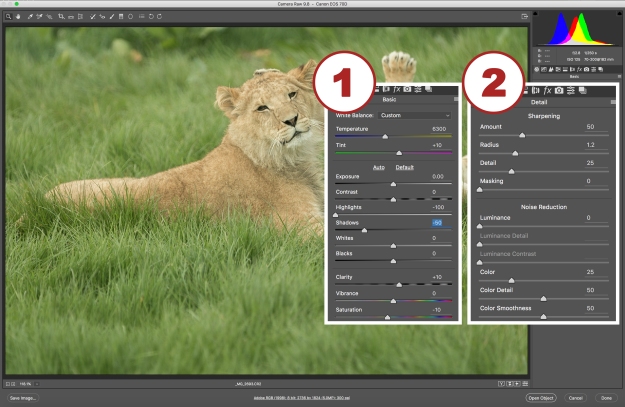
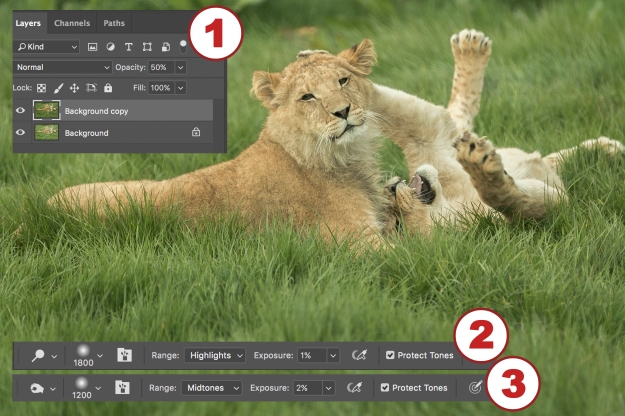
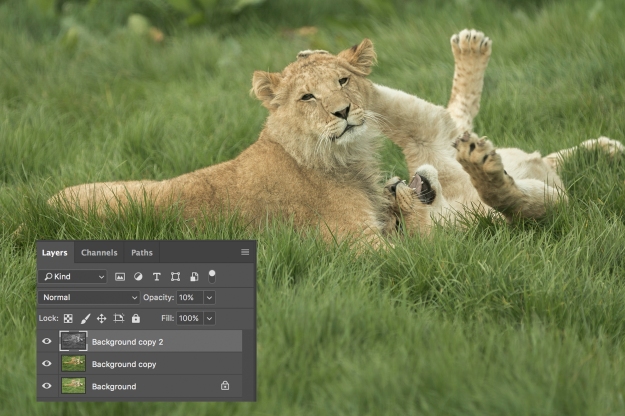
Illustrated from my workbook, some of the post processing work I did were of images I had not yet completely decided whether or not I was submitting towards the final 20. The editing I feel shows a consistency which I wanted and aimed to keep the images looking as natural as possible with bear minimal editing. Upon attending a one to one with my lecturer I discovered there were several other techniques in post process I could have used that may have helped further enhance my images such as using Camera Raw to lens correct, fixing individual colour luminance and even the use of high pass filter for enhanced sharpening. Some of these were techniques I had forgotten about but I feel with more use and experience it will help me improve in that area. Unfortunately I had already ordered my final 20 prints  prior to the one to one meeting as I knew I needed to give the printing business Deadly Digital time to print as they have a heavy workload of other orders to deal with.
After paying for and collecting my final 20 prints I am delighted with the quality of the metallic print and for many of the images you can see the quality most notably from the picture of the lions playing. I was told however that metallic does look similar to lustre however noticing the difference with certain prints. Having looked through the prints all have been printed correctly to the correct given A3 size which I’m delighted with. I was pleased that the pictures turned out bright and clear and none of the prints turned out dark. I feel the format I used having them printed was the right choice, a book format would have been nice but you do commonly find also separate individual prints sold in tourist souvenir shops in the highlands etc for the wildlife. It is also notable that several of the images I showed in post processing I decided not to use due to having to break down not only my best images but what I felt would tell a story as well as show the variety of techniques as mentioned.

 My final shoot I planned a visit to the Isle of May through Anstruther on the May Princess cruise. The North Sea was pretty rough at times and was sick 2 or 3 times, bags were handed out to passengers as it’s a common occurrence. This made the trip to and from the island not as pleasurable, however felt completely fine once on the island. Due to the winds and strong waves they cut our visit shorter so had roughly 2 hours on the Isle of May rather than the 3 hours we expected. Things were perhaps more difficult than expected with photographing the birds, I wanted to capture something a bit different from seagulls and due to the size of the island and limited time spent, there wasn’t enough time for me to spend capturing what I would have liked. There were a few surprising things I managed to capture such as a wild hare and fortunate at that time of the year to capture the puffins which I aimed to photograph. We were told strictly to keep to the paths as the wild birds such as the puffins have their holes they live under and for safety and protection of the birds someone could step on one of the holes destroying their habitat. The paths were fairly
 simple and straight forward to follow around the Island, so managed to find my way back to the boat fine.
 Despite the strong winds the weather was pretty sunny with the clouds and so had good lighting for capturing what I wanted. With the bright sun I was able to capture many images with a lower ISO setting of 100 to reduce brightness from overexposure which was favourable for better quality images. With the increased shutter speed I captured many images such as birds in flight. As many of the birds were perched on the face of the cliffs and on rock formations below, much of what I captured was photographing down at them which I felt was less favourable. Depending on the weather the boat tours around the Island however due to the weather that was something we were restricted from. Despite shooting down at many of the birds I did try to use some framing techniques that created some interesting pictures. The few images I did capture of puffins with the slow shutter speed technique I felt were decent and felt it wasn’t enough to be placed towards my final 20 images. The attempt of the pan shot technique also proved difficult and for the one decent shot I captured it was of a puffin in the sky and didn’t feel it was good enough.
 As the puffins were situated on the cliff edge it became difficult to photograph them from any other angle and the path leading onward was closer to them and didn’t want to frighten them away, therefore the backdrop I captured of the puffins was the North Sea and tried to use some of the cliff edge they were standing on to frame them. The favourite image I captured shows the wonderful contrast in colours between the puffs and their orange beaks and black and white coats to the brightened North Sea in the backdrop from the sun. In the backdrop a seagull soaring behind in flight blurred out. I couldn’t help but feel however that if given more time I could have captured perhaps maybe even better images although I was pleased with what I managed to capture.
 The first image I managed to capture a wild hare camouflaged between the rocks on a grassy slope, this turned out to be one of my favourites as it has the viewer searching around for what is there; in the second image I managed to capture the hare running across the top with the North Sea to the backdrop, the sky helping make the wild hare stand out; one of my favourite shots I captured from the boat before entering onto the island was the birds on top of rock face with cliff face further to the backdrop behind them, I was also pleased with the lighting for this shot; one of my favourite shots of the puffins grouped together using the land to frame the puffins with the North sea to the backdrop that makes them stand out at the cliff edge with a seagull blurred soaring in the background; another shot of a puffin in perfect focus staring at the camera with other puffins blurred to the backdrop, for this I liked the composition; the final image was a favoured landscape shot capturing part of the North Sea to the backdrop with the surrounding land showing the seabirds habitat using the rocks in the foreground to enhance the image.


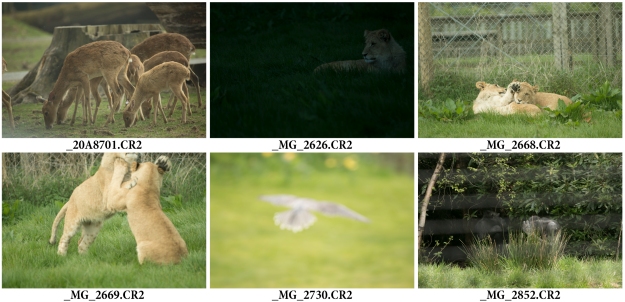
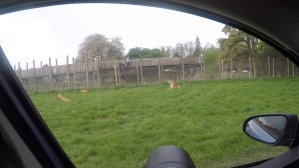 As planned I visited Blair Drummond Safari Park on my travel back from the Cairngorms National Park. The weather was a bit unexpected, there was a lot of overclouding and the sun did not appear till late, however perhaps the most difficult task was trying to capture the animals as I felt their enclosures were very small, for much of the animals I felt it would have been pointless photographing for this reason as there wasn’t enough room to capture something that would look natural. For much of the shoot I used my Canon 70D with the Canon EF 70-200mm f/2.8L ii lens, this being due to the close proximity for much of the animals. The first section driving through which became a task in itself as shooting through a window the colours do not appear the same. I knew this was something however that I could correct in post process using Adobe Camera Raw and Photoshop CC.
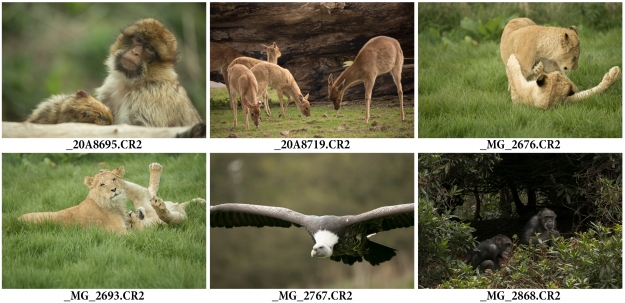
 From the shoot I felt there were at least one or two images that I was fairly pleased with to show for some of the other animals there is to see for wildlife in Scotland, the lions were a favourite. One of the best images I chose from the shoot were two younger lions playing in the grass, as they were closer to the fencing to the back I tried to capture them without the fencing and was quite tricky also considering I was shooting down from the car window. Using the faster shutter speed with a wide open aperture and high speed drive mode, this helped for capturing various images of the young lions playing together. Again, I always try to focus on their eyes as the main focal point although sometimes tricky.
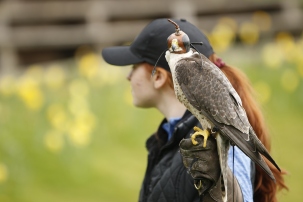
 m the fast shutter

 As arranged I arrived early afternoon to the Osprey Centre in Boat of Garten. Similar to the dolphin’s you don’t know what to expect and what you will capture, however I was lucky enough that when I arrived the female Osprey was sitting guard in her nest as the male Osprey was off fetching food for the female. Photographing the Osprey was pretty challenging, they are a very protected species by the RSPB which I can understand and therefore limited access from the viewpoint of their nest. The Osprey nest is a good distance from the centre which I can respect and therefore I was limited to the shots I could capture of the Osprey. I also tried to avoid photographing where the camera points down at the nest to appear more natural.
 aperture for some images for extended depth of field so my settings varied.


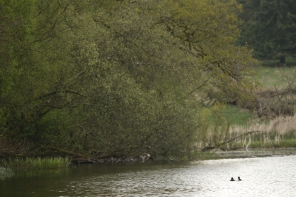
 As I had booked the Dolphin Spirit Cruise in Inverness I knew that there was no guarantee I would get to see the dolphin’s, although I was expecting there to be other wildlife surrounding the area. As expected and was unfortunate we never got to see the dolphin’s on the cruise, however it was interesting hearing about the surrounding area which gives me enough information about the wildlife surrounding such as a place you can visit for photographing red kites as they are fed every day at 2:30pm. Due to there being no dolphin’s in sight and constantly keeping an eye out on the water I was limited with what else I captured. There were some pictures I captured of the birds surrounding land that I managed to capture, but nothing I would have personally favoured. I was fortunate however to capture a bird flying low across the water at speed using the pan technique which I captured razor sharp, however it’s a consideration as to whether or not I feel it’s good enough to be placed among my final 20 images.


 As planned after doing the reindeer shoot I arrived at the Loch Insh boathouse for the wildlife guided boat tour around Loch Insh. From the research I had done about the boat tour I had imagined that there would have been more to it, however it was slightly disappointing. It did mention about the possibility of spotting Osprey on Loch Insh and from the shoot I managed to get one several pictures of the Osprey nest which I was fairly pleased with. A lot of the birds that were mentioned on the guided tour around the Loch were said to be on the surrounding areas. The boat itself was further out from land and therefore even with using the 150-600mm Sigma Sport lens there wasn’t enough zoom to capture much and for me it wasn’t good enough to place towards anything I would wish.
 The wildlife boat tour was booked for 4pm and lasted for 1 hour. The area the boat stopped for the Osprey nest was perfect enough to capture several images, although I never spotted the Osprey themselves I felt this was ideal for capturing something environmental slightly different from the normal landscape shot that captures their habitat. The tree itself was dark due to coming from behind which influenced me to capture a silhouette technique as this was something I never had. I took several shots of the tree and nest both landscape and portrait for variation of choice. The hopes were to capture any birds flying past using a pan technique but found it was difficult as the shoot was indoors on the boat shooting through smaller win
 dows.


 d the Cairngorm reindeer centre in the past I knew from previous research what to expect. I was well prepared with my waterproof trousers and hiking boots to go up into the hills where the reindeer can be found, as it is the only free ranging reindeer in Scotland they did mention to us that there is no guarantee of seeing them. I travelled by car and arrived just in time for the final tour to view the free ranging reindeer. I was informed previously that the reindeer at this time of the year are shedding their winter coats and this was mentioned on the tour. After paying the admission fee at the reindeer centre it was a drive along to a car parking area where they meet as a group to hike across the hills to the reindeer. The walk was fairly straight forward leading down one hill across a bridge and up another and we were informed about their behaviour for safety precautions.

 Photographing the reindeer was not so much a problem, some were very tame and others distant, we were warned however not to touch their antlers as that can be seen as a challenge to them. For me the experience was worth it, especially learning more about the reindeer as the information you learn of the animals I feel is every bit as important as the photography, this helps you better understand their nature which I feel can help take better pictures. The preferred backdrop I
 would have liked to have captured with the reindeer was facing downhill which proved problematic as photographing the reindeer shooting downhill I feel wouldn’t have looked right. From my experience when shooting level it gives more of a natural feel and that’s what I aimed for.
 I was pleased to capture the first image with a glare of light breaking through onto the reindeer and captured the closeup of the reindeer eating; the second image i favoured of the two reindeer with the landscape behind them; the third image was one of the fewer shots I captured of them grouped without the visitors in the shot with some of the landscape to the backdrop; I liked the 4th image again for the landscape with the reindeer grouped closer and the one standing closest which I liked for portraiture and the reindeer closeup eating with the backdrop; the final image was arguably my favourite shot, although landscape it is fitting for the habitat of much of the wildlife including the reindeer. The sunlight lighting the foreground set off with the dramatic dark skies to the backdrop.
 You can see from the first shot someone was standing in the shot and was very difficult to move as I was surrounded by other reindeer and people; second image was the mistake of over exposure which I had to correct for both my cameras; although I liked the stance of the reindeer, I also included this image to show shooting up hill as less desirable, although I liked the landscape; The fourth image shows the difficulty and limitations of capturing the reindeer with people walking around them; in the fifth image with the reindeer facing uphill it wasn’t a favoured shot especially for composition and finally the underexposure of the landscape river, again having to correct the exposure using my wide angle lens.


 The Highland Wildlife Park shoot was something rather quite unexpected, perhaps slightly disappointing, although can understand due to the nature of the animals and
 Neil himself has more than 30 years of experience shooting wildlife and was able to pass on his knowledge and experience which I learned from. When doing a photographic day tour of the Highland Wildlife Park with someone who has know knowledge in photography there’s nothing to take from that.
 difference, then again it was to be expected as it’s a task in itself photographing through fencing and in restricted areas, especially the task avoiding capturing the wired fencing.
 50-600mm Sigma Sport lens as zoomed into 600mm the widest aperture is f/6.3 and using the faster shutter speed. I am pleased I captured a variety of shots of the different animals to give me options but will limit that as I want my final 20 to show a variety of different techniques and will only include if I feel it stands out.
 The first image of the alpha male wolf staring directly at the camera was one of my favoured portrait shots I managed to capture with the hint of the trees surrounding him, this certainly helped make the picture stand out; another shot I was fortunate to capture was one of the wolves eating a carcass showing it’s teeth, not only does it show the character of the wolf but was also pleased with the framing of the shot with the trees to make it appear as if in it’s natural habitat; the third picture was one of my best as I was lucky to capture the wolf eating with the expression on its face looking at the camera. I also captured it framed with the wood across the bottom and the tree, again appearing natural; The fourth image of the Musk Ox looking to play with another was another one of my favoured shots not just for the moment but also managed to capture them framed with raised bit of land to make it appear level with them which appears more natural; for the tiger, although a slight disappointment with it slightly off focus on the eyes but love the composition and finally one my favourite closeup portraits of a monkey with the sharp detail on its face and eyes as it calls out as it knows it’s about to be fed.
 The first image of the wolf was a disappointment due to capturing the back cross hatched wired fencing, I did try to take out in post processing but the higher ISO grain noise makes that extremely difficult. This would have been one of my best images had the wolf been closer to blur the background out more; the second image was one of my absolute favourites for the way the wolf was walking towards, again it shows the character of the wolf and loved the framing of the shot, however it was a big disappointment with the eyes completely out of focus; for the third image of the Scottish wildcat it chose to eat at the back of the enclosure with the wired fencing and shooting through the fencing was problematic especially shooting down at the Scottish wildcat; another disappointment and example shooting upward was the snow leopard on top of the rocks as you can barely make out the creature; the second shot of the snow leopard eating, again it was one of my favoured shots but disappointment due to the wired fencing you can see slightly blurred across the face of the snow leopard which ruins the overall image and finally although I loved the shot of the tiger walking towards and looking at the lens, the eyes were slightly off focus due to the woods and fencing.


 e you from Anstruther to the Isle of May. As he mentioned the Scottish Seabird Centre are very restrictive in limiting access, it is for this reason I decided to book privately for a boat to the Isle of May from Anstruther.
 ire Isle which would be the perfect opportunity for using my Sigma 150-600mm Sport lens to capture any sea life on the outskirts of the Island. Given that I will be on the boat I will be sure to wear waterproofs to keep myself dry. Both my 70-200mm and Sigma 150-600mm lenses are ideal not only as they are waterproof but for their own individual use. The 70-200mm lens will be ideal for capturing the pan shots required and for distance subjects using the Sigma 150-600mm lens.
 should be sufficient enough time given there will be an estimated 3 hours on the Island which gives me ample amount of opportunity to photograph what I would like. The Isle of May is home to a wide variety of wildlife with an estimated 250,000 seabirds including; 120,000 Puffins, which between April through to mid August is said to be the best time for capturing these spectacular birds; large groupsof Guillemots, Razorbills and Shags are also available with 150 seals living on the Isle of May all year round. There will also be the slight chance of spotting Dolphins and Porpoise if lucky with the odd spotting of a whale if lucky.

 With Blair Drummond Safari Park being some what similar to Edinburgh Zoo with the type of animals there are to see, there should be a variety of wildlife to capture especially of the wildlife suited to the hotter climate such as lions etc. The park looks spacious although it’s difficult to tell from certain pictures, I also did some research on Blair Drummond Safari Park on YouTube watching some videos, some of the enclosures look smaller and therefore difficult to shoot in if I’m to capture the wildlife without the fencing in the shot. I’m hoping to capture many great images and judging from the website and videos on YouTube much of it looks similar to the Highland Wildlife Park. The weather was forecasted to be sunny with clouds which will benefit me, for this I won’t need to worry as such about my camera gear and clothes but will wear appropriate clothing in case. Part of Blair Drummond Safari Park is travelling by car through enclosed areas such as the lions enclosure etc so this may give me the
 I maybe limited with capturing some other techniques I would like, however if I can capture some of the other animals such as the lions for example, it may benefit me to show for a variety of what is on offer to see as I based my images around the wildlife tourism in Scotland. Again, it maybe troublesome for capturing images to make it appear closer to natural habitat, depending on available space I will try to crop out any fencing or use shallow depth of field. It would be nice to capture some images of the wildlife in action such as the lions or even birds of prey, for this I will probably use the faster shutter speed again. The birds of prey I would hope I could capture some flight shots using the slower shutter speed for pan technique.
 As I’ve mentioned from previous shoots similar I know from experience that often it is your luck on the day visiting these parks whether or not the animals are there, where you will find them in their enclosures, if close to fences etc it would ruin the shot. Perhaps the most challenging thing today will be taking pictures different to what I may

